GHK-Cu: the copper tripeptide in skin research
GHK-Cu is a complex of the tripeptide GHK and copper. An overview of research on collagen, elastin, wound healing and the differences between cosmetics and research use.
Key findings
- GHK-Cu is a complex of the tripeptide Gly-His-Lys and copper(II) ions.
- In preclinical research it has been linked to collagen and elastin synthesis and to an antioxidant response.
- Much of the data comes from cell cultures; clinical evidence is limited.
- The research material is not a cosmetic product and is not intended to be applied to the skin without a protocol.
GHK-Cu is one of the few peptides that is present both in the scientific literature and in cosmetic formulations. That is precisely why it is often surrounded by more marketing noise than most other peptides.
This article distinguishes between three levels: chemical structure, preclinical mechanisms and clinical evidence.
What is GHK-Cu?
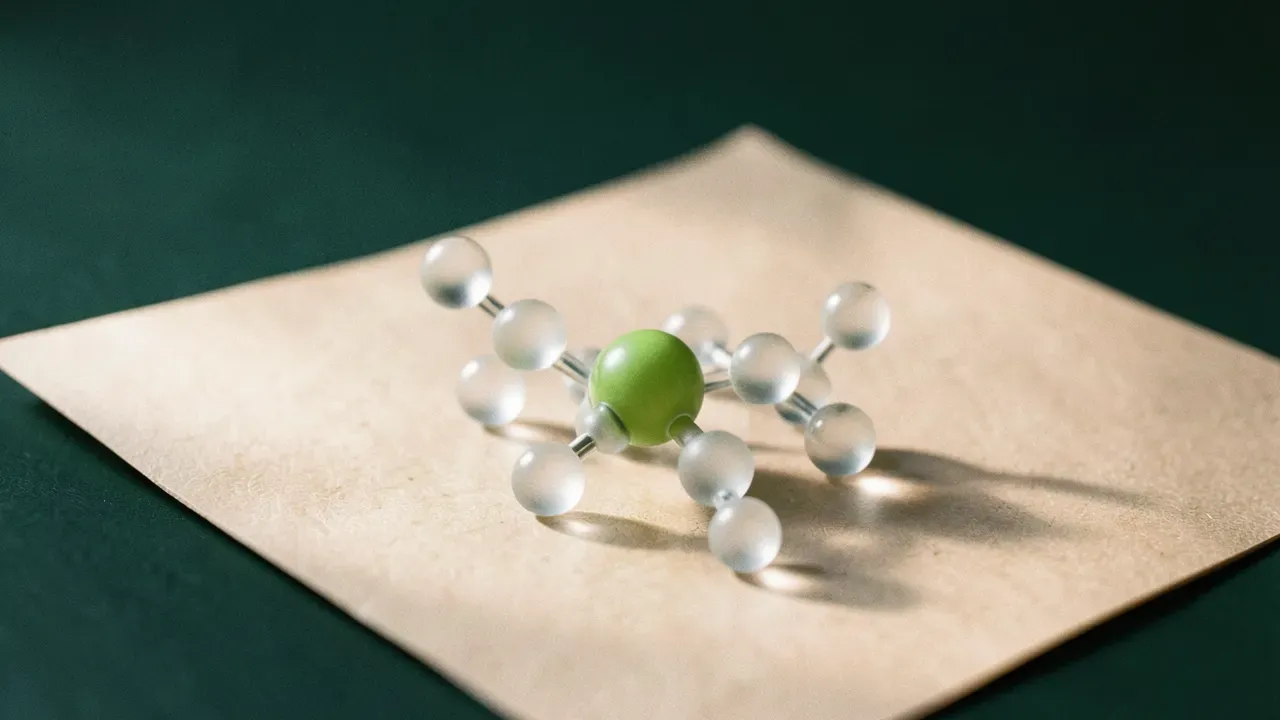
GHK is a tripeptide with the sequence glycine–histidine–lysine. When it binds to copper(II) ions, it forms the GHK-Cu complex. This interaction is not accidental: GHK has a high affinity for copper and can bind it in a stable form.
The peptide was discovered in human plasma in the 1970s. It was later found that its concentration changes with age and during healing processes.
What is being studied?
Collagen synthesis
Collagen is the main structural protein of skin, bone, cartilage and connective tissue. Copper ions are cofactors for enzymes such as lysyl oxidase, which participates in cross-linking collagen fibres. GHK-Cu is thought to stimulate the expression of collagen-related genes in fibroblasts.
Elastin and the extracellular matrix
Elastin gives tissue elasticity. In cell cultures, effects of GHK-Cu on elastin expression and on the balance between matrix synthesis and degradation have been reported.
Antioxidant response
Copper complexes can influence redox balance. In some models a reduction in oxidative stress has been reported, while in others the effects depend on concentration. At high concentrations copper can also act in a pro-oxidant manner.
Wound healing
In skin wound models, GHK-Cu has been linked to faster closure and better tissue organisation. The results are encouraging but mostly preclinical.
What matters when interpreting this?
Three things need to be considered with GHK-Cu:
- Concentration. Copper biology is dose-dependent; more is not always better.
- Form. The complex with copper is not the same as the GHK peptide alone.
- Model. Most studies are in vitro, where there is no immune response, metabolism or intact skin barrier.
Results from fibroblast cultures therefore cannot be transferred to a “skin effect” without clinical studies.
Cosmetics and research use
In cosmetics, GHK-Cu is used in formulations that must meet the requirements of cosmetics legislation. Such a product is intended for application to the skin and has a defined formulation, preservatives and a safety assessment.
Research-grade GHK-Cu in lyophilised form is something different:
- it is not formulated for application to the skin;
- it has not been assessed as a cosmetic product;
- it requires laboratory preparation of a solution;
- it is not intended for ingestion or injection.
If you are interested in a cosmetic effect, look for a product with a clear declaration of ingredients and regulatory compliance, not a research material.
Quality and stability
GHK-Cu is sensitive to light and can form complexes with other metals. For research, therefore, consider:
- protection from light;
- freshly prepared solution;
- an appropriate pH range;
- storage of the lyophilisate at −20 °C;
- documented purity (HPLC) and identity (MS).
The declared purity in the description is ≥ 99 % (HPLC). Read more about analytical methods in the article on HPLC and mass spectrometry.
Safety
GHK-Cu is not an approved medicine. If it is used in a laboratory environment, safety data sheets, eye and skin protection and the rules for handling metal salts must be observed. Long-term safety in humans has not been established.
Conclusion
GHK-Cu is a biologically well-founded peptide with interesting mechanisms in the skin and connective tissue. Its research value lies in the study of the matrix and cellular response; cosmetic and clinical promises, however, must be judged separately.
Frequently asked questions about this topic
Can I use GHK-Cu as a cream?
Why is copper important?
Does GHK-Cu reduce wrinkles?
How to cite
RuskiPeptidi Editorial Team. (2026). GHK-Cu: the copper tripeptide in skin research. RuskiPeptidi.com. https://ruskipeptidi.com/blog/ghk-cu-copper-tripeptide/
Editorial policy
The content is reviewed and sourced. If you find an error, let us know — we will publish a correction.
How we prepare contentSources
RuskiPeptidi Editorial Team
Content is prepared by the RuskiPeptidi.com editorial team based on primary scientific sources, regulatory documents and manufacturer data. Every article is reviewed before publication, and sources are listed at the end of the text.
Editorial policy and sources